Good old’ McDonalds. From its founding in the 40s to our modern day, the fast food joint has stood the test of time. It’s not common that a company’s iconography alone can be recognized international as a key symbol of America. If it’s for better or for worse is a discussion for another day, what matters is how the company through its many decades stayed relevant while also telling its story that correlates with America itself.
To begin we need to understand that brands, even big ones, aren’t guaranteed immortality. It takes a considerable understanding on the world around you to not only win an audience but also keep up with the constant change of time. As decades change so do the customs, Blockbuster was once a household name but in the 2020s it’s something of the past. And while McDonalds is an older brand it had the luxury of being a fast food restaurant instead of evolving technology, their marketing department still needed to find clever ways to keep the name in the mind of all Americans.
From its creation, in order to win over the new unfamiliar crowd they promoted what the core of McDonalds is, food made fast and cheap. And it worked! But advertising your fast food gimmick doesn’t work when competitors also adopt a similar concept. So with the country being familiar with the food, why not push the narrative that McDonalds was something special in America by showcasing it as a place for families and fun. Throughout the 70s to 90s, the selling point went beyond food, but also fun. The development of mascots, happy meals, and play places encouraged kids to beg their parents to become repeat customers. Ronald McDonald and his crew became a staple within themselves, having cartoons and video games made to promote the brand.
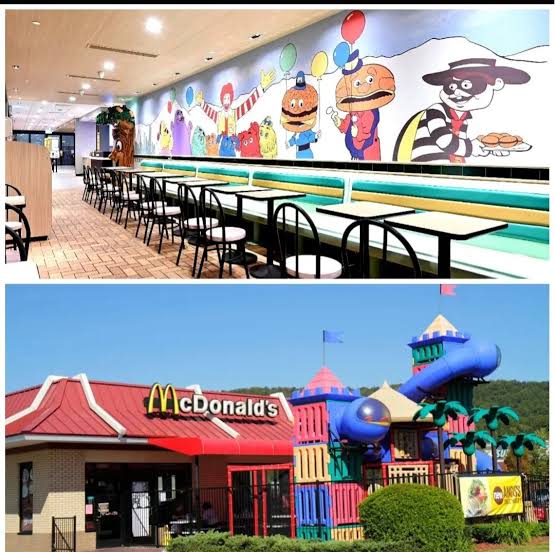
While it was a genius part of the research and developers, there comes a point where your marketing can feel a little stiff. Sure McDonalds was still a juggernaut, but showcasing the same place the same way can get old. It’s not replacing what doesn’t need fixing, instead, it’s presenting the same but in a fresh new way. Through the 2000s we’ve shifted away from a place of imagination and now have a more modern and mature looking place. Where, yes children could have their happy meals, but there was more of a focus on the adults. Quick breakfast, coffee, there was no time for play place or colorful interior. By this time America was also shifting from the late 20th century, a focus on minimalism and people become most distant through technology. And the worst part: it appeared that the Ronald McDonald crew was phased out for these terrifying looking demon spawns, mainly because the Minions were popular at the time so everyone wanted to make their own version.
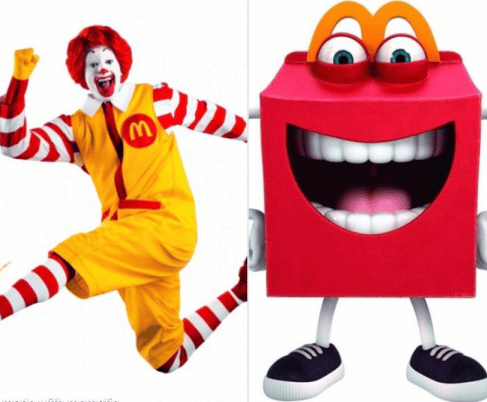
However in modern day, our society have been looking back at those distant days and remembering what we have forgotten. And the marketing team has took note, there has been a push from McDonalds to bring back classic characters while giving them a “viral twist”, the example coming to head was the whole Grimace Shake event. Alongside the every now and then McRib return, this style of marketing solely relies on the brand they created so long ago that people would automatically recognized when they bring it back up.
Throughout the many years, we seen America and McDonalds change side by side: through the popularization of fast food, to marketing places as imaginative for the wholesome American family, to the rise of minimalism, and the modern day of remembering the past. Its very clever, the restaurant is in a position where it has become a staple of the nation itself so whenever we as a society change, McDonalds will be there to capitalize on it.
Extra Thoughts: I guess the story of McDonalds will never end until America does, or maybe it’ll even outlive it. That’s an interesting concept.


Leave a Reply